

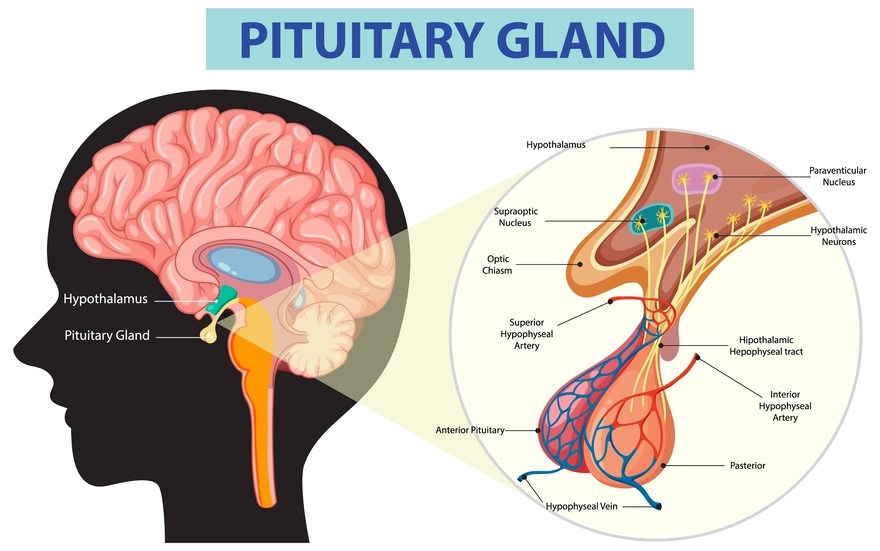
On the heels of my previous two ADHD Research Phases, armed with inspiration and validation from WearsTwoGowns (thank you so much!), I’m going to dive further into the possible connection between my cPTSD (diagnosed currently as PTSD) – i.e. lifetime of trauma – and the The Pituitary Gland. Or, as I like to call it… the Ballsack of the Brain 😝 (listen… you can’t deny that it looks strikingly similar).
So Sayeth the Google: “can repeated emotional trauma cause pituitary problems“
Yes, repeated emotional trauma can cause significant, long-lasting problems with the pituitary gland and the wider neuroendocrine system. Chronic or repeated stress, such as from repeated emotional trauma, leads to persistent dysregulation of the hypothalamic-pituitary-adrenal (HPA) axis, which can result in a range of health issues and physiological changes.
The HPA axis and the effects of chronic stress
The HPA axis is the body’s central stress response system, and it involves the hypothalamus, pituitary gland, and adrenal glands. Repeated trauma affects the pituitary gland through this system:
- Hypothalamus: The brain perceives a threat and the hypothalamus releases corticotropin-releasing hormone (CRH).
- Pituitary Gland: The CRH stimulates the pituitary gland to produce adrenocorticotropic hormone (ACTH).
- Adrenal Glands: The ACTH prompts the adrenal glands to release the stress hormone cortisol.
- Dysregulated Feedback Loop: Under normal circumstances, rising cortisol levels trigger a negative feedback loop that shuts down CRH and ACTH production. However, repeated emotional trauma and chronic stress can disrupt this process. In some cases, such as with Post-Traumatic Stress Disorder (PTSD), the HPA axis can become so sensitive that it overreacts to even mild stressors, leading to persistent imbalances.
Pituitary issues linked to chronic emotional trauma
Chronic trauma can lead to several specific problems involving the pituitary gland:
- Pituitary Gland Enlargement (Hypertrophy): Research has shown that in children and adolescents who have experienced maltreatment and develop PTSD, the volume of the pituitary gland can be significantly larger than in non-traumatized peers. This may be due to the overstimulation caused by persistently high levels of CRH.
- Altered ACTH and Cortisol Production: The HPA axis dysregulation in individuals with PTSD often presents as low cortisol and, less consistently, altered ACTH levels, particularly in those with comorbid depression. This can cause systemic changes due to a weakened anti-inflammatory response.
- Sex Hormone Imbalances: Trauma has been associated with reduced levels of sex hormones in women, suggesting that trauma can potentially suppress ovarian function via a pituitary-related pathway.
- Hyperprolactinemia: Increased levels of the hormone prolactin, called hyperprolactinemia, can occur after physical trauma to the brain, which strongly suggests hypothalamic involvement. Psychosocial stress has also been shown to affect prolactin regulation.
- Hypopituitarism: Although physical brain trauma is a more common cause, severe stress can lead to functional changes in the pituitary gland. Some research suggests that psychological stress may increase the likelihood of developing certain neuroendocrine disorders.
- Increased Risk of Other Conditions: Pituitary problems caused by chronic emotional trauma can lead to wide-ranging health complications, including:
- Cardiovascular disease
- Autoimmune conditions
- Metabolic issues, including obesity and diabetes
- Neurocognitive problems
Is it direct causation?
While the link between emotional trauma and pituitary dysfunction is well-documented, a single traumatic event or chronic stress is not a guaranteed cause of pituitary disease. Other factors, like genetics and preexisting vulnerabilities, also play a significant role. Additionally, a pituitary tumor itself can cause psychiatric symptoms, complicating the question of whether the tumor or the emotional distress came first.
The takeaway is that emotional trauma creates a powerful and measurable biological stress response that can profoundly alter pituitary function, potentially leading to a variety of physical and mental health problems over time.
Thoughts: Feck. There’s a LOT here that I could do further research on. I want to highlight almost everything and give examples of my symptoms, experiences, and whatnot. I’ll admit that I’m feeling pretty overwhelmed by just how much there is to connect here. But… we gotta start somewhere, so I suppose I’ll work my way through this list of info the best I can.
First: There’s that HPA axis thing again (I discovered this in Phase 2). I will link my previous post about The Plague (my father). It’s a long read, but it gives the best examples to date of what I had to endure throughout my childhood. It isn’t a complete picture, of course, because – despite repeated attempts to escape – I still suffered his abuse until about 2 years ago. All the same, it’s no wonder that my brain has been in a constant state of stress.
Second: Pituitary Issues. I do not currently have a single piece of imaging of my brain, but I would hazard a really good guess that my pituitary gland (and maybe other shit) has been damaged in some sort of way, causing most (if not all) the physical and mental health issues I have today. Now, as to how that presents itself… I won’t know until I’m able to get a damn referral to endocrinology and have them order a brain scan. Buuuuut… I can also hazard a good guess that each of those things listed there are things that have been happening to me – based on the symptoms I have. As for “neuroendocrine disorders” – well… that might need to be the next Phase of my ADHD Research (for educational purposes).
And that’s about all I can muster today. It isn’t much, but I woke up not feeling all that great (super stuffy sinus/throat and headache). And, today is the first day in 2 weeks that I get to take my actual Sunday Off From All the Things and I wish to do the Minecraft’ing with Granny Sidhé. 😁
 Who IS EnchiPants?!
One response to “ADHD Research – Phase 3”
[…] if you’ve read my previous 2 ADHD Research Posts (Phase 2 and Phase 3), and recall: the Cushing’s Disease section mentions “adrenocorticotropic hormone […]
LikeLike